
A boiler is a heating system that generates heat by boiling water and distributing it throughout a building to provide warmth. Unlike furnaces, which heat air and circulate it via ducts, boilers use water or steam, circulated through pipes to radiators, for heat transfer.
Boilers are commonly used in both residential and commercial settings and can run on various fuels, including natural gas, oil, propane, or electricity. With the integration of automation devices, sensors, and smart controls, today’s boilers deliver greater performance, lower fuel consumption, and quieter operation than traditional furnace systems. Moreover, they rely on water circulation rather than forced air, which helps reduce airborne dust and allergens, contributing to overall indoor air quality.
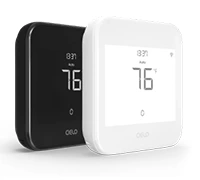
Budget-friendly smart thermostat for central HVAC systems. A thermostat that guarantees savings.
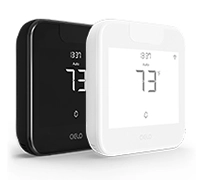
Award-winning smart thermostat for mini-splits. Technology that goes above & beyond.
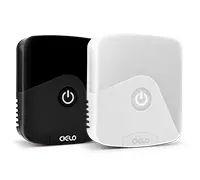
Sleekest smart thermostat for mini-split, window & portable ACs. A design that magically blends.
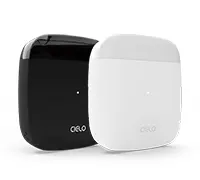
Smart mini-split thermostat that is engineered for affordable comfort. Small in size, big in benefits.
How Does a Boiler Work?
A boiler uses oil, natural gas, propane, or electricity to heat water inside a sealed tank. A circulation pump then moves this hot water through a closed loop of pipes that run throughout the home.
Radiators (or baseboards) sit along this loop and act as the points where heat is released into the rooms. After the water or steam transfers its heat, it returns to the boiler to be reheated, and the cycle continues.
Types of Boilers
While all boilers operate on the same basic principle – heating water and distributing it through a closed loop – they differ in design, fuel source, and efficiency. The most common types include:
- Natural Gas Boilers: Fueled by natural gas, they are efficient and are widely used. They are typically less expensive to operate compared to oil or electric systems.
- Oil-Fired Boilers: These burn oil to produce hot water or steam and are common in areas without access to natural gas.
- Electric Boilers: Use electric resistance strips to generate heat. They are cleaner and quieter but often cost more to operate.
- Condensing Boilers: They capture and reuse heat from exhaust gases, achieving greater efficiency than standard boilers.
- Combination (Combi) Boilers: A compact system that provides both space heating and hot water on demand. They are highly popular in residential setups.
HVAC Boiler Maintenance
Routine boiler maintenance is crucial for ensuring the safe and efficient operation of a boiler. It involves several key practices that help maintain performance and prolong the system’s lifespan. An annual professional inspection by a qualified HVAC technician is essential to inspect, clean, and test all components thoroughly.
Here are some DIY maintenance tasks you can do to ensure optimal functioning.
- Check the boiler’s water level and adjust if needed.
- Bleed radiators regularly to release trapped air.
- Inspect and clean vents and the chimney.
- Check for leaks around the heat exchanger.
- Monitor and adjust the pressure gauge. It should be between 1-2 bars.
- Descale the boiler to remove sediment buildup.
- Clean the heat exchanger to prevent soot buildup and improve energy efficiency.