
An air conditioner is an HVAC system that helps regulate temperature and humidity in your home. The unit works by removing heat from the interior of a building and transferring it outside. Central air conditioners (also known as ducted air conditioners) are used to cool the entire home. In contrast, ductless air conditioners (such as mini-split, window, or portable units) can only cool a specific room or area of the house. An air conditioner consists of two main units: an indoor evaporator (air handler) and an outdoor condenser.
How Does an Air Conditioner Work?
Air conditioners work on the fundamental principle of heat transfer, removing heat from the indoor environment and releasing it outdoors. This process occurs through a continuous refrigeration cycle that relies on a chemical refrigerant circulating between two main components — the indoor evaporator coil and the outdoor condenser coil.
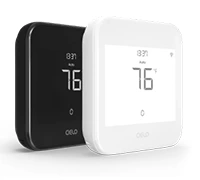
Budget-friendly smart thermostat for central HVAC systems. A thermostat that guarantees savings.
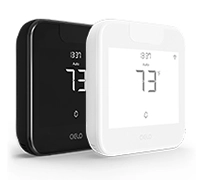
Award-winning smart thermostat for mini-splits. Technology that goes above & beyond.
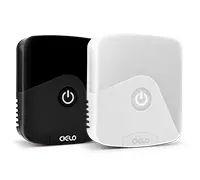
Sleekest smart thermostat for mini-split, window & portable ACs. A design that magically blends.
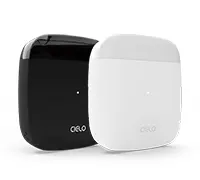
Smart mini-split thermostat that is engineered for affordable comfort. Small in size, big in benefits.
The refrigerant in the indoor coil absorbs heat, changing from liquid to gas. The warm, gaseous refrigerant is drawn into the compressor, which increases its pressure and temperature before sending it to the outdoor condenser coil. In the condenser, the refrigerant releases the absorbed heat to the outdoor air, causing it to condense back into a liquid state.
The resulting cool air from this process is then circulated into the living space through the air handler (ductless systems) and ducts and vents (ducted systems).
This continuous loop of evaporation, compression, condensation, and expansion allows the air conditioner to effectively remove heat and humidity from indoor air, maintaining a cool, comfortable indoor climate.
What Are the Benefits of Using an Air Conditioner?
Air conditioners enhance indoor comfort by providing consistent cooling. They also improve indoor air quality by filtering airborne particles such as dust, pollen, and pet dander. Maintaining optimal humidity also helps prevent mold growth and musty odors. Modern, high-efficiency systems can significantly reduce energy consumption and lower utility costs while maintaining consistent performance. Additionally, advanced systems equipped with smart thermostats allow for greater customization and improved operational efficiency.