
A carbon footprint is the total amount of greenhouse gases emitted into the atmosphere by the activities of an individual, company, city, or country. The gases include carbon dioxide (CO₂), nitrogen oxide (N₂O), hydrofluorocarbons (HFCs), and methane (CH₄), which trap heat and contribute to global warming. HFCs are commonly used as HVAC refrigerants.
The footprint includes both direct and indirect emissions. Direct sources are those that involve burning fossil fuels, such as for heating or transportation. Indirect emission sources are those that result from electricity consumption rather than from direct fuel burning. For instance, the energy used to power homes, factories, or appliances when the electricity is generated from fossil fuels.
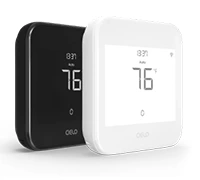
Budget-friendly smart thermostat for central HVAC systems. A thermostat that guarantees savings.
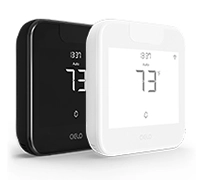
Award-winning smart thermostat for mini-splits. Technology that goes above & beyond.
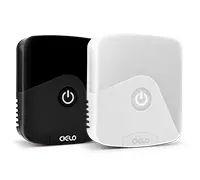
Sleekest smart thermostat for mini-split, window & portable ACs. A design that magically blends.

Smart mini-split thermostat that is engineered for affordable comfort. Small in size, big in benefits.
How Is Carbon Footprint Calculated?
A carbon footprint estimates the total volume of greenhouse gases released into the atmosphere. Although the measurement includes multiple greenhouse gases such as methane, nitrous oxide, and fluorinated gases, results are usually expressed in carbon dioxide equivalents (CO2e). For example, a footprint might be reported as 5 tons of CO2e. Using CO₂ equivalency enables clear comparisons across activities, events, or industries that would otherwise be difficult to evaluate.
A country’s carbon footprint is estimated using key economic and environmental indicators, such as fossil fuel consumption, electricity generation, industrial output, and land use. Once the total emissions have been estimated, carbon sinks are deducted from that figure. Carbon sinks are natural or artificial processes that absorb carbon dioxide, such as forests, oceans, and reforestation efforts.
An individual’s carbon footprint is the total amount of greenhouse gases emitted by daily activities, such as food consumption, energy use, travel, shopping, and recycling habits.
The Environmental Protection Agency has its own online tool to calculate personal carbon footprint. The EPA’s Carbon Footprint Calculator estimates emissions from three main sources: home energy, transportation, and waste.
How Smart Thermostats Can Help Reduce Your Carbon Footprint
If you’re wondering how to reduce your carbon footprint at home, the answer lies in smarter energy management. According to the US Department of Energy, heating and cooling account for more than 50% of a home’s total energy consumption. Investing in smart climate-control devices is necessary to meet growing sustainability needs.
Smart thermostats optimize energy use by automatically adjusting temperature settings and minimizing energy waste when you’re away. Over time, this contributes to a smaller household carbon footprint and supports broader efforts to combat climate change. Cielo smart thermostats feature scheduling and geofencing that help run heating and cooling only when needed, preventing energy waste. Moreover, energy usage tracking helps you monitor your HVAC runtime, allowing you to optimize usage as required.
Knowing your footprint helps you take action, such as switching to renewable energy, using public transport, or adopting smart devices such as smart thermostats to cut energy waste.