
The U.S. Department of Energy (DOE) is a federal agency established in 1977 to oversee national energy and nuclear research efforts. Currently, this department plays a central role in shaping the US energy policy, advancing research, and promoting efficiency across various sectors.
In the HVAC industry, the DOE is responsible for monitoring energy consumption, setting energy-efficiency standards for HVAC systems manufactured across the US, and determining how their energy consumption can help meet national energy-efficiency goals.
What Is the Role of DOE in HVAC?
Heating and cooling account for a large share of your energy use, about 35% of total energy in buildings. Recognizing this impact, the DOE works to improve system efficiency and affordability, aiming to reduce the installation cost of HVAC/R equipment by 50% over the next decade. The DOE ensures that HVAC equipment meets performance requirements through the following primary actions.
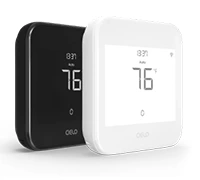
Budget-friendly smart thermostat for central HVAC systems. A thermostat that guarantees savings.
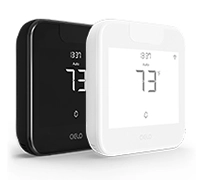
Award-winning smart thermostat for mini-splits. Technology that goes above & beyond.
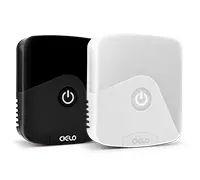
Sleekest smart thermostat for mini-split, window & portable ACs. A design that magically blends.
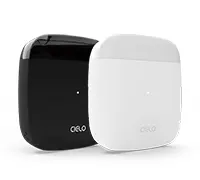
Smart mini-split thermostat that is engineered for affordable comfort. Small in size, big in benefits.
1. Sets Efficiency Regulations
The DOE establishes minimum energy-efficiency levels that HVAC equipment must meet to be manufactured or sold in the United States. These standards require systems to use a certain amount of energy or less, relative to their heating or cooling output.
In 2023, the DOE updated the rules for testing HVAC efficiency, changing how cooling and heating performance are measured. The SEER (Seasonal Energy Efficiency Ratio) for cooling was updated to SEER2, and the HSPF rating (Heating Seasonal Performance Factor) used for heating efficiency was updated to HSPF2 to reflect the new testing approach.
2. Creates the Standard Test Procedures
It also defines the uniform testing methods manufacturers must follow when determining efficiency ratings. These standardized procedures are used to calculate the amount of energy the appliance is expected to use over a year. This is shown on the EnergyGuide label, as required by the Federal Trade Commission.
3. Sets Minimum Efficiency Requirements by Region
The DOE has also set regional efficiency standards to account for different climates across the United States. To do this, the country is divided into three regions.
- North (colder winters)
- Southeast (hotter, humid climates)
- Southwest (hot climates with specific cooling load profiles)
| Region | SEER2 | EER2 (<45k BTU/h) | EER2 (≥45k BTU/h) | HSPF2 (National Standard) |
| North | 13 | — | — | 7.5 |
| Southeast | 14 | — | — | 7.5 |
| Southwest | 14 | 12.2 | 11.7 | 7.5 |
DOE & ENERGY STAR® Program
The U.S. Department of Energy (DOE) partners with the Environmental Protection Agency (EPA) to oversee the ENERGY STAR® program. Through this collaboration, products must meet strict energy-efficiency criteria established by the DOE to earn ENERGY STAR® certification. These requirements ensure that certified products use less energy and are rigorously tested for maximum energy efficiency.