
A central air conditioner cools your home by circulating conditioned air through a system of supply and return ducts. It removes heat and moisture from indoor air by passing it over an evaporator coil, where the refrigerant absorbs the heat. The compressor then moves the heated refrigerant to the outdoor condenser coil, where the heat is released outdoors. The resulting cool air is then circulated throughout your home via the ductwork, maintaining a comfortable indoor temperature.
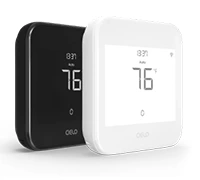
Budget-friendly smart thermostat for central HVAC systems. A thermostat that guarantees savings.
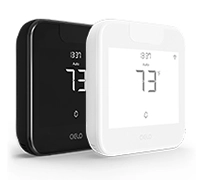
Award-winning smart thermostat for mini-splits. Technology that goes above & beyond.
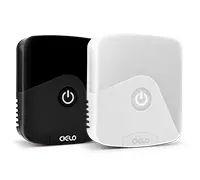
Sleekest smart thermostat for mini-split, window & portable ACs. A design that magically blends.
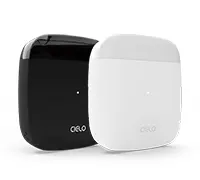
Smart mini-split thermostat that is engineered for affordable comfort. Small in size, big in benefits.
Major Components of Central Air Conditioner
An air conditioner consists of:
- Thermostat: Mounted on a wall inside your home, the thermostat lets you set your desired temperature and controls when the system turns on or off.
- Evaporator Coil: Hot air from your home is blown over the evaporator coil, where the refrigerant absorbs heat.
- Condenser Coil: The compressor pumps the refrigerant to the condenser coil, where it releases heat and returns to its liquid state.
- Compressor: The compressor raises the temperature and pressure, allowing it to cycle through the system to the condenser coil.
- Blower Motor: This electric motor pushes the cool air throughout the ductwork.
- Expansion Valve: It regulates the amount of refrigerant going into the evaporator coil.
- Ductwork: It’s a network of ducts that circulate conditioned air throughout your home.
Types of Central Air Conditioners
Central air conditioners come in two main types:
- Split-System Central Air Conditioners: A split system includes an indoor unit and an outdoor unit. The indoor unit, typically a fan coil, includes the evaporative coil and blower fan (air handler) that circulate air throughout the home. In contrast, the outdoor unit contains the fan and compressor.
- Packaged Air Conditioners: A packaged system is an all-in-one unit that combines an evaporator coil, a blower fan, a compressor, and a condenser coil. It is well-suited for areas with limited space. Typically placed on the roof or on a concrete slab next to the house’s foundation, packed units pull warm air from the building through return air ducts into the evaporative coil. This hot air passes through the evaporative coil, and cooled air is returned to the home via supply air ducts while the hot air is released back into the atmosphere.
Split systems are commonly used in residential settings, while packaged systems are often used in commercial buildings.
Benefits of Central Air Conditioner
- Whole-House Comfort: Central air conditioners cool the entire home evenly through ductwork, providing consistent comfort.
- Improved Indoor Air Quality: These systems filter indoor air as it circulates, helping improve indoor air quality.
- Seamless Integration With Heating Systems: A central air conditioner can be conveniently paired with a furnace using the same ductwork.