Geothermal heat pumps, also called ground-source or geo-exchange systems, use the earth’s stable underground temperature to heat and cool your home.
Below the surface, temperature typically ranges from 40°F to 70°F year-round. By transferring heat between your home and the ground, geothermal heat pumps operate far more efficiently, using 25% to 50% less energy than air-source heat pumps.
How Does a Geothermal Heat Pump Work?
A geothermal heat pump uses underground pipes called ground loops, buried several feet below the surface. These loops circulate a fluid made of water and an antifreeze solution, such as ethylene or propylene glycol, which absorbs or releases heat as needed.
Cooling Mode
In cooling mode, the refrigerant in the indoor unit absorbs heat from your home. The compressor increases the refrigerant’s pressure and temperature. The hot refrigerant transfers the heat to the fluid circulating through the underground ground loop. That fluid carries the heat through the buried piping and releases it into the cooler ground.
After giving up its heat, the refrigerant passes through the expansion valve, where its pressure and temperature are reduced. The cooled refrigerant then returns to the evaporator coil to absorb more indoor heat. This cycle repeats until your desired temperature is reached.
Heating Mode
In heating mode, a reversing valve reverses the flow, bringing heat into your home instead of removing it. The fluid flowing through the underground pipes absorbs heat from the earth and transfers its heat to the refrigerant via the heat exchanger.
In the heat pump, this refrigerant is then compressed to increase its temperature. The heat is then extracted from the refrigerant and distributed throughout your home via ductwork or a radiant heating system. This process repeats continuously, providing reliable warmth throughout the winter.
Types of Geothermal Heat Pumps
Closed Loop System
A closed-loop geothermal heat pump system circulates an antifreeze solution through a sealed pipe loop that is buried in the ground or submerged in water. Inside the heat pump, a heat exchanger transfers heat between the refrigerant and the antifreeze solution.
Horizontal Loop System: For this system, trenches are dug 3 to 6 feet deep, and the piping is laid horizontally. To fit more pipe into a trench, a slinky or coiled pipe design may be used. These trenches can be installed beneath lawns or parking areas, making them practical when space allows.
Vertical Loop System: Instead of trenches, vertical holes are drilled into the ground, typically spaced about 20 feet apart and extending 100 to 400 feet deep. Vertical loop piping is installed in each hole and connected by horizontal piping that leads back to the heat pump inside the building.
Pond or Lake Loop System: The loop is submerged in the pond or lake, where water transfers heat more quickly than soil. To prevent freezing, the loop must remain at least 8 feet below the water surface.
Open-Loop Geothermal System
An open-loop geothermal system uses natural groundwater rather than antifreeze to transfer heat. Water is pumped from an underground well, passes through the heat pump to heat or cool your home, and is then returned to the ground through a separate return well, called a secondary recharge well. Open-loop systems require an abundant groundwater supply and are often restricted or prohibited by local regulations.
Installation Cost of Geothermal Heat Pump
Geothermal systems generally have higher upfront costs than conventional heating and cooling systems. On average, installing a geothermal heat pump costs between $20,000 and $25,000, including equipment, labor, and installation. Factors such as your location, local ground conditions, and your home insulation can all influence the final cost.
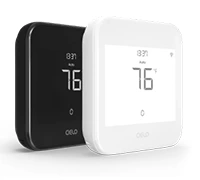
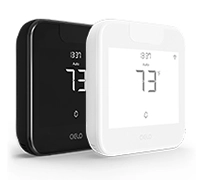
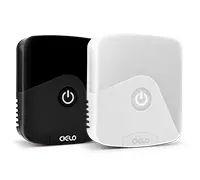
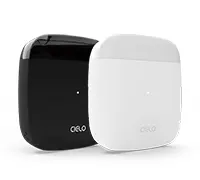
Maximize Geothermal Energy Savings with Cielo Smart Thermostats
Cielo Smart Thermostats make geothermal heat pumps smart and more efficient. They let you control your system remotely, set precise schedules, and monitor energy usage, ensuring your home stays comfortable year-round.