Cielo
Cielo
Key Takeaways
- Mini-splits may or may not shut off once the desired temperature is achieved, depending on the system type.
- Traditional on/off mini-splits run at full power and then shut off completely.
- Inverter-driven mini-splits reduce their output and continue running at a low level instead of turning off.
Mini-splits have become one of the most popular HVAC solutions for modern homes. They are particularly quiet, energy-efficient, and provide more accurate temperature control than conventional central HVAC systems. One common question homeowners have is: Do mini-splits shut off when the set temperature is reached?
The answer isn’t a simple yes or no. The type of mini-split system you have and the technology it uses determine whether it completely shuts off. Understanding this distinction helps you better comprehend your system’s behavior and ensures it is functioning as intended.
Traditional Mini-Splits
Traditional on/off mini-splits operate using a fixed-speed compressor, similar to conventional central air conditioners. These systems follow a simple operating cycle: they turn on at full power, run until the room reaches the set temperature, and then turn off completely.
When the room temperature drifts outside the thermostat range, the mini-split turns back on at full capacity to reach the setpoint temperature again. This cycle repeats throughout the day.
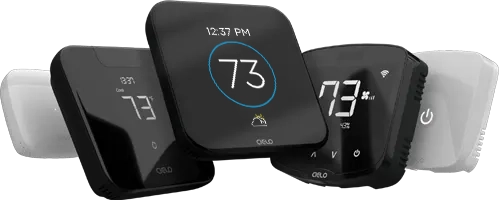
Budget-friendly smart thermostat for central HVAC systems. A thermostat that guarantees savings.
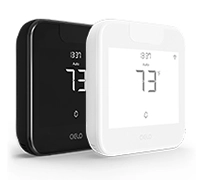
Award-winning smart thermostat for mini-splits. Technology that goes above & beyond.
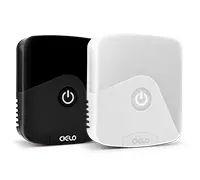
Sleekest smart thermostat for mini-split, window & portable ACs. A design that magically blends.
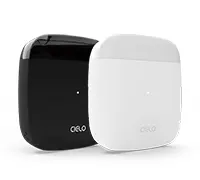
Smart mini-split thermostat that is engineered for affordable comfort. Small in size, big in benefits.
As they have only two states – fully on or completely off – traditional on/off mini-splits tend to experience:
- Noticeable temperature swings
- Frequent cycling of HVAC equipment
- Louder operation during startup
- Increased wear on the compressor
Most people think that traditional mini-splits save energy because they don’t run continuously. However, the repeated on/off cycling requires more power during each startup and reduces long-term efficiency.
Inverter-Driven Mini-Splits
Inverter-driven units offer a more advanced approach to temperature control. Instead of operating at a fixed speed, they use a variable-speed compressor that automatically adjusts its output in response to real-time heating or cooling demand.
When the set temperature is reached, the compressor does not shut off completely. Instead, it slows significantly and delivers only the cooling or heating required to maintain the desired temperature. It continues to run at low speed, delivering just enough heating or cooling to maintain stable indoor conditions.
Why Inverter Mini-Splits Keep Running After Reaching the Set Temperature?
Instead of turning off completely when the setpoint temperature is reached, the inverter mini-split continues to operate at a low capacity, making small, continuous changes to keep indoor conditions stable.
This approach offers several advantages:
- Prevents temperature swing.
- Maintains steady comfort.
- Reduces strain on system components.
- Improves the system’s overall efficiency.
Although it may seem that this continuous operation consumes more electricity, the opposite is true. Running at a reduced speed uses less power, eliminates energy-intensive cycles, and improves overall seasonal efficiency. In contrast, frequent on/off cycling forces the compressor to restart at full power each time, which uses significantly more energy than maintaining a low, steady output.
The Role of Temperature Differential
Temperature difference, also known as temperature swing, refers to the number of degrees above or below the setpoint temperature at which the mini-split turns on or off. Most mini-splits have a fixed difference of 3- 5°F, which determines when the system cycles on and off.
A smaller differential leads to more frequent cycling, providing more stable indoor conditions and tighter temperature control. In comparison, a wider differential improves energy efficiency by reducing the number of start/stop cycles.
Enhance Your Mini-Split Efficiency With Smart Thermostats for Mini-Splits
Smart thermostats for mini-splits offer greater control and flexibility over your home climate and energy usage.
With app-based control, you can manage your mini-split from anywhere and unlock smart features that ensure your unit runs only when needed.
Schedules let you fine-tune heating/cooling, helping your unit run more efficiently and reducing unnecessary energy consumption. Geofencing automatically adjusts your mini-split settings when you leave home and restores your preferred temperature before you return, so you stay comfortable without wasting energy.
In addition to these features, they also track energy usage to help you understand your consumption patterns and take control of your bills.
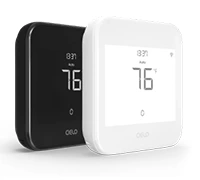
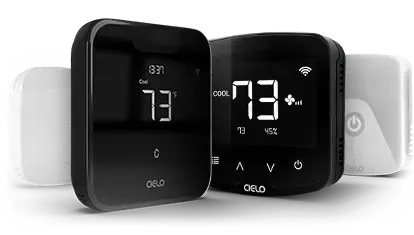
Your best choice to make any mini-split, window,
or portable AC smart. Enhance your comfort and savings.
In Conclusion
Modern inverter-driven mini-split systems do not turn off completely once the set temperature is reached. Instead, they automatically reduce their output and continue operating at a very low capacity to maintain a stable and consistent indoor temperature.
However, traditional on/off mini-splits have a fixed compressor speed and completely turn off once the desired temperature is reached. These systems restart only when the room temperature moves outside the set range, which can result in slight temperature fluctuations and higher energy use over time.
Frequently Asked Questions
Should I Keep My Mini-Split Air Conditioner Running 24/7?
If you have an inverter-driven mini-split, you can keep your unit running 24/7, just make sure to adjust the temperature from your usual settings when going out for a considerable time. These systems are designed to operate continuously at low capacity and often use less energy than frequently turning the unit on and off.
Does the Indoor Fan Running Mean the System Is Still Heating or Cooling?
No. The fan continues to run even after the compressor has slowed down. This helps distribute air evenly, prevents hot and cold spots, maintains accurate temperature readings, and improves overall comfort.