
In extreme weather conditions, heat pumps become less efficient and rely on a backup heating source called auxiliary heat to maintain comfort. This backup heating source activates only when your primary heating system, i.e., a heat pump, fails to reach your set temperature due to extreme weather.
While effective, auxiliary heat uses significantly more energy to warm your home and can quickly drive up your utility bills. The backup energy source is usually a furnace/boiler or electric resistance strips.
The auxiliary lockout feature helps minimize unnecessary auxiliary heat usage. By setting rules for when auxiliary heat activates, it reduces energy consumption and protects the HVAC system from excessive wear and strain.
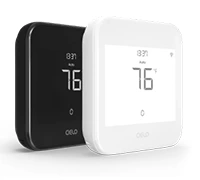
Budget-friendly smart thermostat for central HVAC systems. A thermostat that guarantees savings.
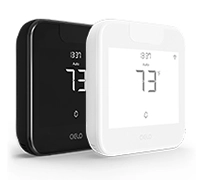
Award-winning smart thermostat for mini-splits. Technology that goes above & beyond.
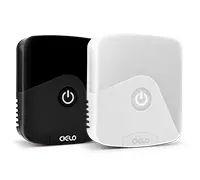
Sleekest smart thermostat for mini-split, window & portable ACs. A design that magically blends.
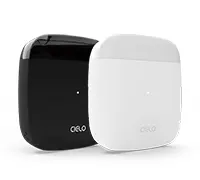
Smart mini-split thermostat that is engineered for affordable comfort. Small in size, big in benefits.
How Does Auxiliary Lockout Work?
Smart thermostats manage auxiliary lockout by continuously monitoring outdoor temperature and using HVAC threshold settings to determine when auxiliary heat can operate.
- You can set a temperature threshold that prevents auxiliary heat from running unless it’s needed, i.e, the aux heat will only turn on when the difference between your setpoint and the indoor temperature exceeds your set threshold. Once the temperature difference falls below your set threshold, auxiliary heat will automatically turn off, and the system will switch to the heat pump for heating.
- You can also set stage-based thresholds, where stage 2 heating activates only if the temperature difference from your setpoint becomes large enough to require additional support beyond stage 1 heating.
- A maximum outdoor temperature can also be set, above which auxiliary heat remains locked out, and only the heat pump operates.
- Operational timers further reduce auxiliary heat use by limiting how long the heat pump must run before aux heat can engage.
- A minimum operating time for auxiliary heat can also be specified to prevent unnecessary usage.
Best Practices for Reducing Aux Usage
- Set your thermostat to 68°F in winter for maximum efficiency, and increase the temperature by 1 or 2 degrees at a time.
- Set a maximum outdoor temperature (which varies by climate) so auxiliary heat remains locked out unless it becomes absolutely necessary.
- Extending heat pump runtime and minimizing auxiliary runtime can significantly reduce energy use.
- Seal windows and doors to prevent heat loss and drafts, helping your heat pump maintain the desired temperature more efficiently.
- Maintain your heat pump regularly to ensure it operates efficiently at lower outdoor temperatures. Keep ducts, vents, and the area around the outdoor unit clear of debris, and regularly clean or replace the filter.