
COP stands for the Coefficient of Performance and measures how efficiently an HVAC system operates. It compares the amount of heating or cooling produced by a system to the total energy it consumes. A unit with a higher COP consumes less energy to deliver the same level of heating or cooling, which helps lower your carbon footprint.
How Is COP Calculated?
The formula used to calculate COP is:
Coefficient of Performance (COP) = Heating or Cooling Output / Energy Input
Example:
- Heating Output: 4 kW of heat
- Energy Input: 1 kW of electricity
- COP = 4 ÷ 1 = 4.0
A unit with a COP of 4 delivers 4 times as much energy as it consumes.
Fossil-fuel-based HVAC systems (boilers/furnaces) generate heat by burning fuels such as natural gas, propane, or oil. Heat pumps, on the other hand, work differently. They transfer existing heat from a source such as the air, ground, or water into your home.
As heat pumps move heat rather than producing it, they can deliver more energy than the electricity they consume. This is why heat pumps often have COP values greater than 1.
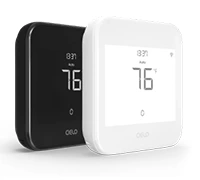
Budget-friendly smart thermostat for central HVAC systems. A thermostat that guarantees savings.
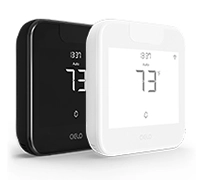
Award-winning smart thermostat for mini-splits. Technology that goes above & beyond.
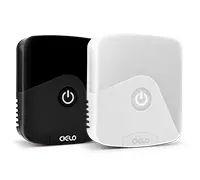
Sleekest smart thermostat for mini-split, window & portable ACs. A design that magically blends.
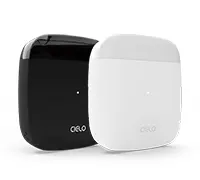
Smart mini-split thermostat that is engineered for affordable comfort. Small in size, big in benefits.
Why COP Matters
A system with a higher COP doesn’t just save on energy bills; it also helps maintain a consistent, comfortable temperature throughout your home without overworking the HVAC equipment. By efficiently heating and cooling a space, systems with a high COP experience less wear and tear, which extends the overall lifespan of the HVAC system.
Efficiency in HVAC systems is more than just cost savings. High-COP systems often run quieter since they don’t need to work as hard to reach the desired temperature. They also contribute to a smaller environmental footprint, consume less electricity, and reduce greenhouse gas emissions associated with burning fossil fuels.
COP vs. Other Efficiency Ratings
While COP focuses on the ratio of heating or cooling output to energy input, other efficiency ratings measure performance in different ways:
- HSPF2: It stands for heating seasonal performance factor and is an updated version of HSPF. It measures a heat pump’s heating efficiency over a season, but with a key improvement: it better reflects real-world conditions.
- SEER2: It is a seasonal energy efficiency rating that measures the cooling efficiency of ACs and heat pumps over a cooling season. SEER2 considers seasonal performance, but it also accounts for modern testing procedures that better simulate real-world conditions.
- EER2: It measures cooling efficiency at a fixed outdoor temperature, usually 95°F, giving a snapshot of system performance in hot conditions.
When comparing HVAC systems, considering all these ratings provides a complete view of year-round energy performance. This helps you understand efficiency in both real-time operations and seasonal conditions.