
Cubic feet per minute (CFM) is the measurement of how much air moves through a space in one minute. In HVAC systems, CFM indicates the airflow delivered by a system and is a key factor in the performance of forced-air systems such as furnaces, air conditioners, and heat pumps.
Why Does CFM Matter in HVAC?
CFM plays a critical role in a system’s ability to distribute conditioned air evenly throughout a space. A standard AC or heat pump can produce an average of 400 CFM per ton of cooling capacity.
- Low CFM can cause weak airflow, hot or cold spots, frozen evaporator coils, and overheating components.
- High CFM can lead to wasted energy and increased operating costs.

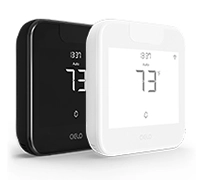
Budget-friendly smart thermostat for central HVAC systems. A thermostat that guarantees savings.
Award-winning smart thermostat for mini-splits. Technology that goes above & beyond.

Sleekest smart thermostat for mini-split, window & portable ACs. A design that magically blends.

Smart mini-split thermostat that is engineered for affordable comfort. Small in size, big in benefits.
How Is CFM Calculated?
Use this formula to calculate the CFM of a room:
- CFM = Room Length (ft) x Room Width (ft) x Room Height (ft.) x ACH (Air Changes Desired per Hour) ÷ 60 (mins)
HVAC professionals typically use tools like anemometers to measure airflow speed and duct calculators to determine the appropriate CFM for different duct sizes and layouts.
This calculation also takes into account multiple factors, such as the area’s size, the number of occupants, the space’s function (e.g., kitchen, living room, or office), and any special ventilation requirements.
CFM & ACH
CFM is directly linked to ACH (Air change per hour), which measures how many times the air inside a home is completely replaced with fresh or recirculated air within one hour. Adequate air exchange helps remove indoor pollutants, excess moisture, and stale air. In general, a higher ACH contributes to better indoor air quality and a healthier living environment.
Modern homes with tight construction often rely on mechanical ventilation systems such as exhaust fans, energy recovery ventilators (ERVs), or whole-house ventilators to meet recommended airflow levels.
Following proper CFM guidelines helps maintain a balanced environment and clean indoor air, while reducing strain on your HVAC equipment.