
A heat exchanger is one of the most essential components in an HVAC system. It is responsible for safely and efficiently transferring heat from one medium to another. In addition, a heat exchanger prevents toxic combustion gases from mixing with indoor air. This separation ensures that the heated air entering your living spaces remains clean, safe, and free of toxic byproducts such as carbon monoxide.
How Does a Heat Exchanger Work?
When a furnace begins a heating cycle, fuel such as natural gas, propane, or oil is ignited in the combustion chamber. The burning fuel creates hot gases that travel through the furnace’s heat exchanger, a set of metal tubes or coils, designed to withstand high temperatures. As these hot gases move through the exchanger, heat is transferred through the metal walls.
Simultaneously, a blower fan draws in cooler indoor air and pushes it across the heat exchanger’s outer surface. As the air passes over the heated metal, it absorbs warmth and becomes the heated air that circulates throughout your home via the ductwork.
Meanwhile, the cooled combustion gases exit safely through the furnace’s flue or vent system, preventing toxic byproducts, including carbon monoxide, from mixing with indoor air.
This process allows the furnace to convert fuel into heat efficiently and safely, while keeping the air in your living spaces clean and breathable.
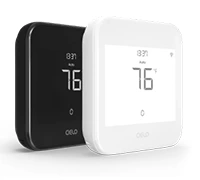
Budget-friendly smart thermostat for central HVAC systems. A thermostat that guarantees savings.
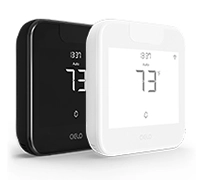
Award-winning smart thermostat for mini-splits. Technology that goes above & beyond.
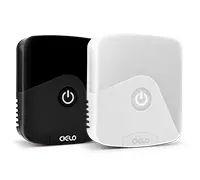
Sleekest smart thermostat for mini-split, window & portable ACs. A design that magically blends.

Smart mini-split thermostat that is engineered for affordable comfort. Small in size, big in benefits.
Types of Heat Exchangers in HVAC Systems
Heat exchangers come in several designs, each optimized for different HVAC needs. In residential furnaces, the following types are most common:
1. Primary Heat Exchanger
The primary heat exchanger is the main component responsible for transferring heat from the combustion gases. It usually consists of curved metal tubes or cells made from aluminized steel for durability and heat conduction. This exchanger handles the hottest temperatures and is found in all standard and high-efficiency furnaces.
2. Secondary (Condensing) Heat Exchanger
High-efficiency furnaces (90% AFUE and above) include a secondary heat exchanger. After the combustion gases pass through the primary exchanger, they still contain heat, especially in the water vapor produced by combustion. The secondary heat exchanger extracts this additional heat by cooling the gases enough to condense the vapor into liquid. This process releases latent heat, which the furnace captures and uses to warm the home. These exchangers are typically made of stainless steel or coated metals to handle acidic condensation.
3. Plate Heat Exchanger
A plate heat exchanger uses a series of thin metal plates stacked together to create multiple channels for heat transfer. While more common in industrial settings, some advanced HVAC systems may incorporate plate exchangers for zoning or radiant heating applications. They offer high efficiency due to their large surface area.
4. Shell-and-Tube Heat Exchanger
This type consists of a series of tubes (carrying one fluid) inside a sealed cylindrical shell (carrying another fluid). In HVAC, shell-and-tube exchangers are often used in commercial chillers, boilers, and large-scale HVAC equipment. They handle high pressure and large heat loads.
5. Evaporator and Condenser Coils (Refrigerant-Based Heat Exchangers)
In air conditioners and heat pumps, the evaporator coil and condenser coil also function as heat exchangers, but instead of combustion gases, they transfer heat using refrigerant. Some HVAC systems, such as air conditioners and heat pumps, use other types of heat exchangers (such as coils).
Importance of the Heat Exchanger
-
Safety
A well-functioning heat exchanger is critical for indoor safety. If cracks or holes develop, combustion gases can leak into the home. This can introduce carbon monoxide, a dangerous and potentially deadly gas. Regular inspections are essential to detect early signs of damage.
-
Efficiency
The design and condition of the heat exchanger directly affect how efficiently a furnace converts fuel into heat. Modern systems with advanced exchanger designs can extract more heat from the combustion gases, reducing energy waste and lowering utility bills.
-
Air Quality
By keeping combustion gases and household air completely separate, the heat exchanger ensures that the heated air entering your home remains clean and safe to breathe.