
The N+1 redundancy in HVAC is about adding an additional unit (+1) beyond the number required to meet normal load conditions (N). This extra HVAC unit serves as a backup, allowing the system to maintain proper heating or cooling if one unit fails or is taken offline for maintenance. For example, if a building requires four air handling units to maintain the required indoor temperature, an N+1 design would include five units.
The N+1 approach is widely used in data centers, hospitals, and other critical facilities where even a brief temperature deviation can lead to serious consequences. It ensures comfort even when the system is down for maintenance or failure.
Operational Modes in N+1 HVAC Configuration
In an N+1 HVAC configuration, HVAC units are typically connected via controls that allow them to operate at partial capacity or keep one unit in standby mode to improve overall efficiency.
- Active/Load Sharing: In a load-sharing N+1 configuration, all units operate at partial capacity, reducing strain on a single HVAC system. If one unit fails, the remaining units automatically increase output without compromising comfort.
- Passive/Hot Standby: In a Standby N+1 configuration, the additional unit (+1) remains in standby mode until a failure or maintenance event occurs, then starts automatically to replace the lost capacity.

Budget-friendly smart thermostat for central HVAC systems. A thermostat that guarantees savings.
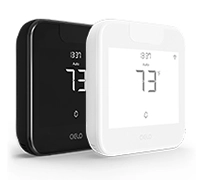
Award-winning smart thermostat for mini-splits. Technology that goes above & beyond.

Sleekest smart thermostat for mini-split, window & portable ACs. A design that magically blends.

Smart mini-split thermostat that is engineered for affordable comfort. Small in size, big in benefits.
Examples of N+1 Implementation
- Chillers: If a data center requires 1,200 tons of cooling to operate (3 chillers at 400 tons each), an N+1 HVAC configuration would include 4 chillers (totaling 1,600 tons).
- Fan Arrays: If a system needs 5 fans to provide sufficient airflow, a 6th fan will be added under the N+1 approach. If one fan fails, the remaining 5 maintain full airflow capacity.
- Hydronic Systems: In hydronic systems, one extra pump is installed so that maintenance can be performed on any single unit without interrupting water flow to chillers or boilers
N+1 vs N+2 vs 2N
N+1 is considered a moderate level of redundancy. It protects against the failure/maintenance of a single HVAC unit. However, for large data centers requiring higher reliability, N+2 or 2N configurations are adapted since they provide additional layers of protection against system failure.
- N+2: Two backup units are installed instead of one, offering resilience if multiple HVAC units fail.
- 2N: A fully mirrored HVAC system is installed, with every unit having an identical backup ready to take over instantly.
While these designs provide greater resilience, they also increase installation and operating costs. N+1 is often chosen because it delivers strong reliability with a more reasonable budget.