
A programmable thermostat lets you adjust your home heating and cooling automatically according to preset schedules. You can program different temperatures for morning, daytime, evening, and night, or create unique schedules for each day. Once set, the thermostat automatically lowers the setpoint when you’re asleep or away and restores a comfortable temperature before you return. This helps reduce energy use and lowers monthly utility bills.
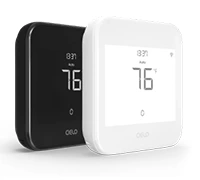
Budget-friendly smart thermostat for central HVAC systems. A thermostat that guarantees savings.
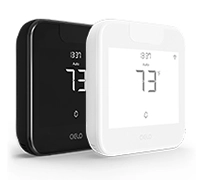
Award-winning smart thermostat for mini-splits. Technology that goes above & beyond.
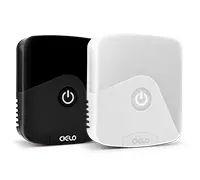
Sleekest smart thermostat for mini-split, window & portable ACs. A design that magically blends.
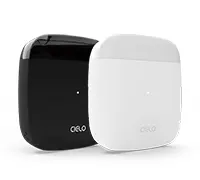
Smart mini-split thermostat that is engineered for affordable comfort. Small in size, big in benefits.
How Does a Programmable Thermostat Function?
In a programmable thermostat, you set the temperature you want at specific times, and the thermostat activates heating or cooling based on those schedules. Most thermostats in this category support the following programming formats:
- 1-Day: Same schedule repeats daily.
- 5-2: One schedule for weekdays, another for weekends.
- 5-1-1: Separate schedules for weekdays, Saturday, and Sunday.
- 7-Day: A unique schedule for each day, best for variable routines.
The thermostat uses its built-in sensor to read the room’s temperature and tells the HVAC system when to turn on or off to reach the set temperature. Some advanced models also include a recovery mode that intelligently starts preheating or precooling your home ahead of your scheduled activity to reach your desired temperature.
Does a Programmable Thermostat Save Energy?
According to the Department of Energy, simply lowering your heating setpoint by 7–10°F for about 8 hours a day can save up to 10% on heating and cooling costs. A programmable thermostat helps you achieve this automatically by adjusting the temperature when you’re asleep or away and bringing it back to your preferred level before you return.
Non-Programmable vs. Programmable Thermostats
|
|
Programmable Thermostat |
|
|
Control Type |
Manual control only |
Can be programmed for automated adjustments |
|
Schedules |
No scheduling capability |
Supports schedules |
|
Energy Savings |
Limited ways for savings |
Higher potential savings due to automatic setbacks |
What to Consider While Buying a Programmable Thermostat?
Assess how comfortable you are with setting schedules. Some thermostats have simple interfaces, while others offer more customization. Consider how much complexity you want to interact with. If your routine is consistent, a basic programmable thermostat may be enough. If you want finer temperature control or dynamic adjustments, smart models provide more flexibility.
Are Smart Thermostats Programmable?
Yes, smart thermostats are programmable, but they also offer Wi-Fi connectivity, remote control via phone or computer, and advanced automation features. While any smart thermostat lets you set temperature schedules, ENERGY STAR–certified smart thermostats go further by optimizing those schedules for better energy savings and comfort.