
Sensible heat is the heat energy that causes a change in temperature of a substance but doesn’t modify its state. For instance, when a heating system warms up the air, a change in temperature occurs without changing the phase. This is the heat you can sense and feel, and it can be measured by a thermostat or a thermometer. Sensible heat plays a key role in maintaining indoor climate, making it an important part of heating and cooling processes.
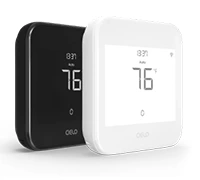
Budget-friendly smart thermostat for central HVAC systems. A thermostat that guarantees savings.
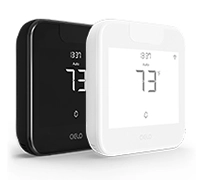
Award-winning smart thermostat for mini-splits. Technology that goes above & beyond.
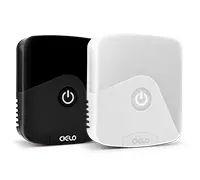
Sleekest smart thermostat for mini-split, window & portable ACs. A design that magically blends.
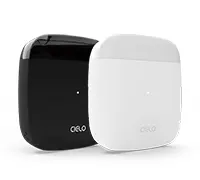
Smart mini-split thermostat that is engineered for affordable comfort. Small in size, big in benefits.
Sensible Heat vs. Latent Heat
Latent heat is the opposite of sensible heat. It alters the physical state of a substance without impacting its temperature. It changes the state of a substance from liquid to gas, from solid to liquid, and so on. In HVAC, latent heat refers to the energy absorbed or released when the moisture content in the air changes, such as during humidification or dehumidification, without changing the air’s temperature.
In HVAC systems, you will find both sensible and latent heating working together. For instance, during the cooling process, when heat is removed from the air (sensible heat), moisture is also removed through condensation, which represents latent heat.
If an HVAC system removes only sensible heat, the air may feel cool but remain sticky due to high humidity. On the other hand, if it removes too much latent heat without addressing sensible heat, the space may feel dry and uncomfortable.
Both sensible and latent heat are crucial for maintaining a balanced indoor climate and consistent comfort throughout your home.
Sensible Heat Capacity
In HVAC, capacity refers to a system’s ability to remove heat from a space. Sensible heat is the HVAC system’s cooling capacity expressed in tons. Latent heat capacity refers to the unit’s ability to remove moisture from the air.
Sensible Heat Ratio
The sensible heat ratio (SHR) is the percentage of total capacity dedicated to lowering temperature, with the remaining capacity used for controlling humidity levels. HVAC contractors use the SHR, along with home size, climate, and other factors, to accurately size a system for optimal comfort.