
Thermostat setback is the practice of adjusting your thermostat during specific periods to lower energy consumption. Also called a setback thermostat, this involves adjusting your thermostat from your usual settings when you are away or asleep. During summer, you raise the thermostat to use less cooling, and during winter, you lower it to use less heating.
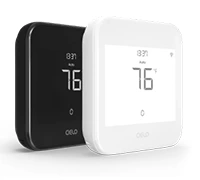
Budget-friendly smart thermostat for central HVAC systems. A thermostat that guarantees savings.
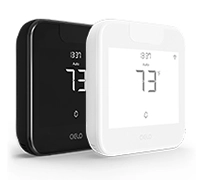
Award-winning smart thermostat for mini-splits. Technology that goes above & beyond.
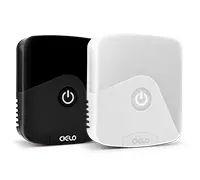
Sleekest smart thermostat for mini-split, window & portable ACs. A design that magically blends.
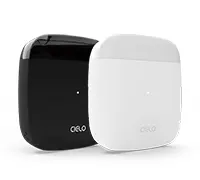
Smart mini-split thermostat that is engineered for affordable comfort. Small in size, big in benefits.
The Science Behind Setback Strategy
The thermostat setback strategy works by reducing the temperature difference between your home and outdoors. This difference, called delta T, impacts how your heating and cooling system works.
A large delta T = more heat loss in winter and more heat gain in summer.
It’s based on the law of thermodynamics. The law states that heat flows from a region of high temperature to a region of lower temperature.
For example, if your thermostat is set to 75°F in winter while it’s 55°F outside, the 20°F difference causes heat to escape quickly, forcing your heating system to run longer to maintain that high indoor temperature. But when you lower the thermostat from 75°F to 68°F, the gap narrows, and heat escapes more slowly. This reduced heat loss means lower energy consumption, especially during times when comfort isn’t a priority, such as when you’re asleep or away from home. Even small setbacks can noticeably ease the load on your HVAC system and lead to greater savings over time.
Best Setback Temperature
The US Department of Energy (DOE) recommends setting your thermostat to 68°F–70°F in winter and 78°F in summer when you’re home. Moreover, further reducing the temperature by 7–10 degrees while you’re away or asleep can help you save up to 10% on your energy bills.
When you use this setback temperature, your HVAC system runs less frequently, reducing energy cost. Although your unit will run longer to bring the home back to your preferred temperature when you return, it still uses less energy than heating/cooling an empty space.
Types of Thermostat for Setback
The type of thermostat you have determines how much effort is needed to apply temperature setbacks.
- Manual or non-programmable thermostats require you to adjust the temperature each time you want a setback.
- Programmable thermostats make the process a little easier by allowing you to set schedules for weekdays and weekends.
- The best option is a smart thermostat, as it offers the highest level of convenience. You just have to set a schedule once for the setback temperature, and it will automatically make the changes. A smart thermostat can also adjust settings based on your location using the geofencing feature. More advanced models learn your daily routine and make adjustments automatically without requiring any manual input.