
AFUE (Annual Fuel Utilization Efficiency) measures how effectively a furnace or boiler converts fuel (natural gas or propane) into usable heat. A higher AFUE rating means less fuel is wasted, resulting in a more efficient heating system.
How Is AFUE Rating Calculated?
AFUE is expressed as a percentage, calculated by dividing the system’s annual heat output by its total annual fuel input.
AFUE = (Total Annual Heat Output in BTUs / Total Annual Energy Input in BTUs) × 100
A furnace typically uses 100 million BTUs of fuel per season, so professionals use this as the annual energy input. Then they use various tools to measure how much of that fuel is converted into usable heat. Once they get that number, they divide it by 100 million BTUs and multiply by 100 to get the AFUE percentage.
AFUE = (90,000,000 BTUs / 100,000,000 BTUs) x 100
AFUE = 90%
A 90% AFUE means 90% of the fuel is converted to heat, while 10% is lost through combustion exhaust and system inefficiencies. Keep in mind that this is the average rating, not the efficiency the furnace will achieve on any given day.
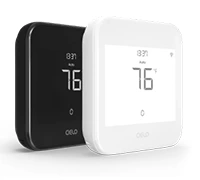
Budget-friendly smart thermostat for central HVAC systems. A thermostat that guarantees savings.
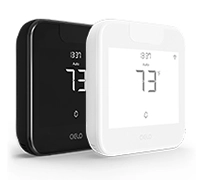
Award-winning smart thermostat for mini-splits. Technology that goes above & beyond.
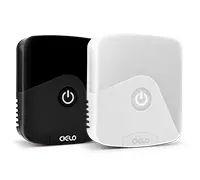
Sleekest smart thermostat for mini-split, window & portable ACs. A design that magically blends.
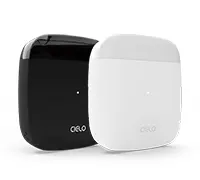
Smart mini-split thermostat that is engineered for affordable comfort. Small in size, big in benefits.
What Is a Good AFUE Rating?
The Federal Trade Commission requires all new furnace and boiler manufacturers to display their AFUE ratings so consumers can easily compare them. Currently, the minimum standard for new furnaces and boilers is 80% AFUE.
Low-Efficiency Systems
- AFUE Rating: 56%–70%
- These systems feature a continuous pilot light and rely on natural draft induction to vent combustion gases, resulting in higher energy loss.
Mid-Efficiency Systems
- AFUE Rating: 80%–83%
- These heating systems typically use electronic ignition rather than a continuous pilot light, resulting in better efficiency.
High-Efficiency Systems
- AFUE Rating: 90%–98.5%
- High-efficiency systems use sealed combustion and condense flue gases in a secondary heat exchanger, achieving the highest fuel efficiency.
Factors That Affect Heating System Efficiency
The higher AFUE percentage indicates a more efficient unit; however, your total operating cost depends on several other factors as well. These include the furnace size, thermostat settings, fuel type, and more.
- System Size: A furnace or boiler that’s too large for your home will cycle on and off frequently, wasting energy and reducing efficiency. One that’s too small will struggle to maintain the desired temperature, running longer and utilizing more fuel.
- Thermostat Settings: The greater the difference between indoor and outdoor temperatures, the more energy your unit will use. Setting your thermostat to 68°F in winter is ideal for both comfort and savings.
- Air Leakage: Heating efficiency can be reduced if heat escapes through chimneys, ductwork, windows, or poorly sealed areas. 10-30% of the energy used to heat is lost through ductwork in unconditioned or partially conditioned spaces, such as attics, garages, or crawl spaces. Proper insulation and sealed ducts help retain heat inside your home.
- Fuel Type: Natural gas generally offers higher efficiency and lower fuel costs than oil- or propane-fired units.
A higher AFUE rating reduces fuel waste and heating costs. However, the actual operating cost also depends on factors such as system size, thermostat settings, insulation, and ductwork condition.