
HVAC load calculation is the process of determining the heating and cooling requirements of your home in order to find out the correct HVAC size. The analysis uses information such as your home’s square footage, window and door areas, insulation quality, and local climate to determine the proper system sizing.
Heating and cooling capacity is measured in BTU per hour or tons, where 1 ton equals 12,000 BTU. A BTU (British Thermal Unit) represents the amount of heat required to raise the temperature of one pound of water by one degree Fahrenheit.
In simple terms, an HVAC load calculation ensures your system is properly sized to heat and cool your home efficiently.

Budget-friendly smart thermostat for central HVAC systems. A thermostat that guarantees savings.
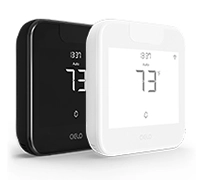
Award-winning smart thermostat for mini-splits. Technology that goes above & beyond.

Sleekest smart thermostat for mini-split, window & portable ACs. A design that magically blends.

Smart mini-split thermostat that is engineered for affordable comfort. Small in size, big in benefits.
Why Is Correct HVAC Sizing Important?
A common misconception is that the bigger the unit, the better. However, an HVAC unit that’s larger than necessary will cycle on and off too frequently (short-cycling). This can lead to several issues:
- The air conditioner won’t run long enough to effectively remove moisture from the air.
- The system constantly starts and stops, resulting in increased energy consumption over time.
- Frequent starting stresses components, leading to premature failure.
Conversely, an undersized unit will run constantly without ever achieving the desired temperature, leading to discomfort and high energy bills.
Common HVAC sizes range from 10,000 BTUs for smaller homes to over 80,000 BTUs for multi-story homes with large ceilings.
| Home Size (sq ft.) | BTU Requirements |
| 500 | 10000-16000 |
| 800 | 16000-22000 |
| 1200 | 21000-28000 |
| 1500 | 27000-33000 |
| 1900 | 36000-40000 |
| 2300 | 44000-49000 |
| 3000 | 55000-65000 |
Manual J Load Calculation
Manual J Load Calculation is a formula devised by Air Conditioning Contractors of America (ACCA) in order to find the correct HVAC size for an area.
HVAC BTU Requirement = Area Size (in square feet) x Cooling and Heating Need (per square foot)
HVAC professionals perform manual J load calculations and must consider multiple factors, such as:
- Climatic conditions
- Insulation types and ratings
- Square footage of your home
- Ceiling height
- Layout of the home
- Heat from lights and appliances
- Number and type of windows
- Number and type of exterior doors
- Frequency of windows and doors opening
- Energy loss areas such as windows, doors, attics, unfinished basements, and ductwork.
- Sun exposure
- Existing duct system
- Number of people in a house