
British Thermal Unit (BTU) is the amount of heat required to raise the temperature of one pound of water by one degree Fahrenheit. In HVAC, BTUs indicate a system’s heating or cooling capacity.
Why BTU Rating Matters
Air conditioners and heat pumps work by removing heat and moisture from indoor air through a refrigeration cycle. HVAC systems work best when their BTU output matches the room or home’s needs. If the system is sized correctly, it runs more efficiently, lasts longer, and maintains consistent comfort. The size of the air conditioner you need depends on how many BTUs are needed to cool your space. To determine this accurately, HVAC professionals use the Manual J calculation. It measures your home’s heating and cooling load based on size, layout, insulation, and climate.
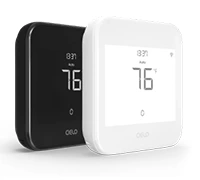
Budget-friendly smart thermostat for central HVAC systems. A thermostat that guarantees savings.
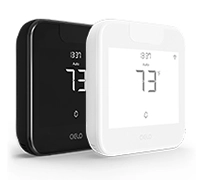
Award-winning smart thermostat for mini-splits. Technology that goes above & beyond.

Sleekest smart thermostat for mini-split, window & portable ACs. A design that magically blends.

Smart mini-split thermostat that is engineered for affordable comfort. Small in size, big in benefits.
BTU & Ton
Tonnage, or ton, measures an air conditioner’s cooling capacity; how much heat it can remove to keep a space cool. One ton equals 12,000 BTUs. Most residential AC units range from 2 to 5 tons, providing 24,000 to 60,000 BTUs of cooling.
How is BTU Calculated
Start by figuring out the square footage of the space you want to cool. Measure the length and width of each room, multiply them, and add up the total area. The US Department of Energy recommends 20 BTUs per square foot.
Here’s a typical BTU calculation formula:
- Area (sq. ft.) × 20 = Required BTUs
For example, a 1,000 sq. ft. home would need about 20,000 BTUs (1,000 × 20). The BTU rating chart gives you a rough guide to follow based on square footage.
| Home Size (sq. ft.) | Unit Size (Tons) | Cooling/Heating Capacity (BTUs) |
| 1,200 sq. ft. | 2 Ton | 24,000 BTUs |
| 1,800 sq. ft. | 3 Ton | 36,000 BTUs |
| 2,400 sq. ft. | 4 Ton | 48,000 BTUs |
| 3,000 sq. ft. | 5 Ton | 60,000 BTUs |
BTUs For Gas Furnaces
The gas furnace BTU calculator uses a different conversion factor. Natural gas contains about 1,036 BTUs per cubic foot, and 1 therm equals 100,000 BTUs. However, not all of that heat makes it into the home. The furnace’s efficiency rating (AFUE) tells how much heat is actually delivered.
For example, a 100,000 BTU furnace with 90% AFUE provides about 90,000 BTUs of usable heat, and the rest is lost through the exhaust. The right furnace size depends on your climate, the size of your home, insulation levels, and how well your home holds heat. This is why two homes of the same size may still need different furnace capacities. Common residential furnace sizes range from 60,000 to 100,000 BTUs, but the best way to choose correctly is by having an HVAC professional perform a Manual J load calculation.
How to Convert BTUs to Kilowatts
A kilowatt-hour tells you how much energy an appliance, such as an air conditioner, uses in one hour. To convert BTUs to kilowatts, use this simple formula
- kW = BTU × 0.000293
For example, a 10,000 BTU air conditioner uses about 2.93 kW (10,000 × 0.000293). Since 1 kW = 1,000 watts, that same unit is about 2,930 watts.