
HSPF stands for Heating Seasonal Performance Factor and measures how efficiently a heat pump provides heat over an entire heating season. The rating is calculated by dividing the total heating output by the total electricity consumed during that period.
HSPF = Total Heating Output (BTU) / Total Electricity Consumption (Watt-hours)
A higher HSPF translates to a more efficient heating system. For example, a heat pump with HSPF 10 will use less electricity to provide the same amount of heat as a unit with HSPF 8.
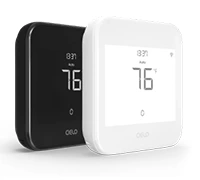
Budget-friendly smart thermostat for central HVAC systems. A thermostat that guarantees savings.
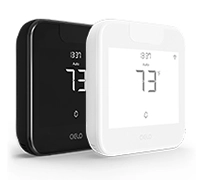
Award-winning smart thermostat for mini-splits. Technology that goes above & beyond.
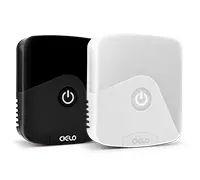
Sleekest smart thermostat for mini-split, window & portable ACs. A design that magically blends.
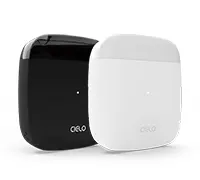
Smart mini-split thermostat that is engineered for affordable comfort. Small in size, big in benefits.
HSPF vs HSPF2
The US Department of Energy updated the testing procedure for measuring heat pump efficiency, resulting in a shift from the old HSPF rating to the updated HSPF2 rating. The test conditions are adjusted to better reflect real-world performance, such as increased external static pressure. Due to this change, HSPF2 values are typically about 10-12% lower than the older HSPF values, even though the system’s actual performance has not changed. Putting it simply, a heat pump previously rated at HSPF 10 would likely be rated around HSPF 8.8 under the new test.
What Is a Good HSPF2 Rating?
Under the new testing standard, split-system heat pumps must have a minimum HSPF2 rating of 7.5, while single-packaged units must meet a minimum of 6.7. While 7.5 is the federal minimum, high-efficiency heat pumps can achieve HSPF2 ratings of 8-10 or higher, which is especially useful if you use your heat pump in cold weather.
Factors That Impact Heat Pump Rating
-
System Sizing
A heat pump must be sized correctly to match the home. If it is undersized, the system may run continuously without reaching the set temperature, wasting energy. If it is oversized, it may heat quickly and then turn on and off frequently, reducing efficiency and comfort.
-
Climate Conditions
Heat pumps work efficiently in a wide range of climates, but performance decreases as outdoor temperatures drop. Cold-climate heat pumps are advanced HVAC systems designed to provide home heating even in freezing conditions. To qualify for the cold-climate designation, non-ducted mini-split systems must deliver at least 8.5 HSPF2, while ducted and single-package systems must achieve at least 8.1 HSPF2.
-
Insulation and Air Sealing
Even a high-efficiency heat pump cannot perform well if the home loses heat quickly. Improving insulation in attics, basements, and exterior walls, along with sealing air leaks around windows and doors, helps reduce heat loss. This allows the heat pump to run more efficiently and stay closer to its rated HSPF2 performance.
How Much Can a Higher HSPF2 Save?
A heat pump with a higher HSPF2 rating uses less electricity, lowers house heating costs, reduces energy use, and improves overall system performance. Beyond the immediate savings, a high-efficiency heat pump also supports long-term benefits, including reduced carbon emissions, better comfort during colder months, and a smaller environmental footprint.