Cielo
Cielo
Key Takeaways
- The type of AC unit you have determines whether you can safely run it continuously.
- Central air conditioners can run nonstop while window units need a break after 8-12 hours.
- Thermostat settings, room size, weather, and insulation can impact your AC runtime.
Can Your Air Conditioner Run 24/7?
Different systems are built differently, and their ability to handle continuous operation varies accordingly.
Conventional air conditioners start at full capacity and run at full speed until your desired temperature is reached. After that, the compressor shuts off. As the room warms up, it kicks back on, and the cycle repeats.
Traditional central AC units can run non-stop without running into issues, provided they are properly maintained. Continuous operation indicates that the system will cycle on/off, but you don’t have to turn it off to give it a break. Conventional window and wall units, on the other hand, are less powerful and should only run for eight to twelve hours at a stretch before you have to switch them off.
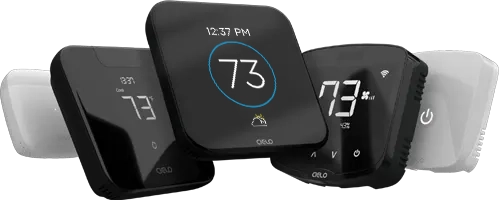
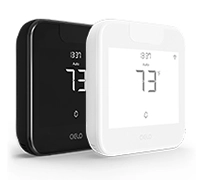
Budget-friendly smart thermostat for central HVAC systems. A thermostat that guarantees savings.
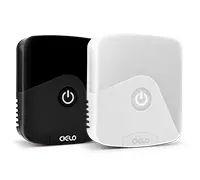
Award-winning smart thermostat for mini-splits. Technology that goes above & beyond.
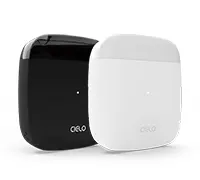
Sleekest smart thermostat for mini-split, window & portable ACs. A design that magically blends.
Smart mini-split thermostat that is engineered for affordable comfort. Small in size, big in benefits.
Inverter Air Conditioners
Rather than cycling on and off, inverter air conditioners adjust their speed between low and high, modulating their output to match actual cooling demand. This keeps temperatures stable, eliminates the energy spikes that come with constant cycling, and makes them significantly more efficient during extended use.
Inverter systems are designed for continuous operation, so running them non-stop is perfectly normal and often more efficient than turning them off and on throughout the day.
If saving energy is a priority, a practical approach is to keep the AC running but set the thermostat a few degrees higher than usual. This keeps the system active without running it at full capacity around the clock. And if you have a smart thermostat, you can go a step further, programming it to automatically raise the temperature when you leave and return it to your preferred setting when you get back, all without ever switching the system off entirely.
Factors That Influence Your AC Run Time
Your AC run time depends on environmental and usage-related factors
-
Thermostat Settings
One of the major factors affecting AC runtime is the thermostat settings. Setting the thermostat too low can force the unit to run for an extended period to reach the desired temperature.
-
Room Size
The room size itself is a detrimental factor in identifying how long an AC will run continuously. Large spaces require more runtime than small spaces.
-
Outdoor Weather Conditions
Elevated outdoor temperatures, paired with humidity, can also affect an air conditioner’s runtime.
During extreme weather conditions or high humidity, the air conditioner will take longer to maintain the desired comfort levels. On particularly hot days, the AC might operate longer than usual.
-
Sun Exposure
Rooms under direct sunlight can take longer to cool than rooms not in direct sunlight.
-
Home Insulation
Apart from thermostat settings and humidity conditions, another key factor affecting the AC runtime is the effectiveness of home insulation. Quality insulation maintains a consistent indoor temperature by keeping cool air in and hot air out while also warding off cold drafts that could penetrate the house. Moreover, an overly drafted house can demand extra work from the AC.
-
Air Conditioner Size
Ensuring that your AC unit’s size matches your home space is vital for efficient operation. An undersized air conditioner will need to run continuously, while an oversized air conditioner will short-cycle without actually reaching your desired temperature.
How to Optimize Energy Use With Continuous AC Use?
Here are simple ways to maintain efficiency when your AC runs continuously.
Regular HVAC Maintenance
Regularly maintaining your HVAC system is essential for energy efficiency. A clogged filter strains equipment and forces it to work harder to cool a space.
Before warm weather arrives each year, call a professional to ensure everything is in working order. In addition to professional HVAC inspection, regularly changing your filter helps your AC run more efficiently and keeps indoor air cleaner. Most filters need replacing every one to three months, depending on thickness and usage.
Switch to a Smart Thermostat
One of the simplest ways to maximize comfort while reducing energy consumption is optimizing HVAC runtime with a smart thermostat. They automatically adjust the temperature when you’re away or asleep, so your AC doesn’t unnecessarily cool an empty house.
Equip your HVAC system with smart features and achieve the perfect balance between comfort & savings.
Learn more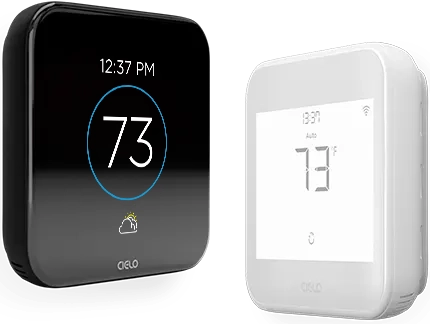
In Conclusion
Running your AC continuously isn’t always a problem; it can actually be a sign that your system is working as designed, especially if you have an inverter unit.
However, for conventional systems, nonstop operation without reaching the desired temperature could indicate an underlying issue that needs attention. The key is to understand your system type and monitor its behavior under different conditions.
By focusing on HVAC maintenance and using smart controls, you can keep your home comfortable while ensuring your AC runs efficiently.
Frequently Asked Questions
The clearest sign your AC is overworking is when it runs nonstop, but your home still isn't reaching your desired temperature. A clogged filter is another common culprit, forcing the system to work harder and increasing runtime. Poor insulation, duct leaks, and refrigerant issues can also push your AC beyond its limits, making it work twice as hard. If your conventional air conditioner runs continuously, it means significantly higher electricity bills, accelerated wear and tear on HVAC components, and more frequent filter replacements.
How to Tell if Your AC Is Overworking?
What Are the Drawbacks of Running a Conventional Air Conditioner Nonstop?