Cielo
Cielo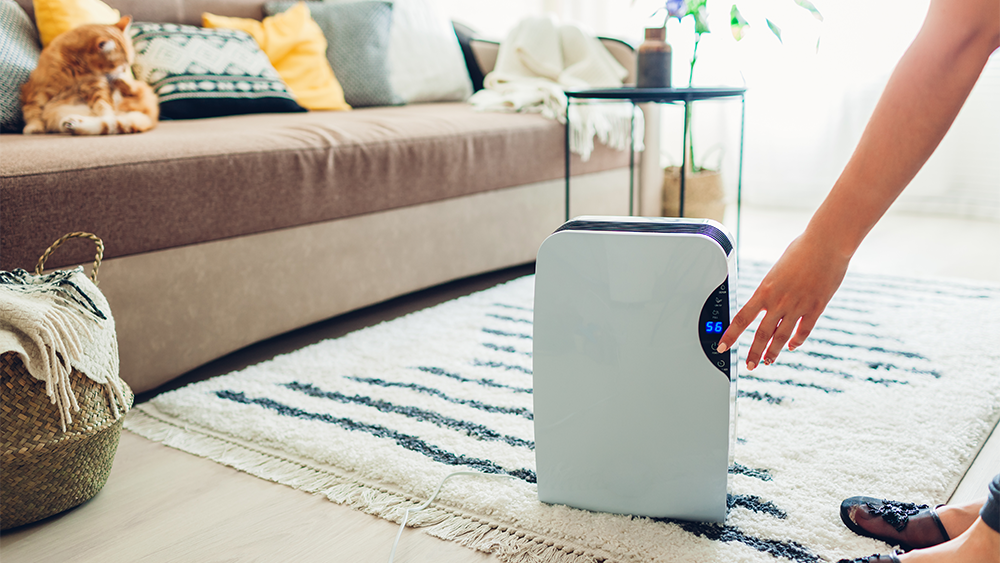
Key Takeaways
- A dehumidifier removes excess moisture but does not lower the indoor temperature.
- Reducing humidity can make you feel cooler by aiding your body’s natural cooling process.
- Connect a dehumidifier with your HVAC and use a smart thermostat to automate humidity control.
If you’ve ever run a dehumidifier on a hot, humid day and felt an instant sense of relief, it’s easy to assume it’s actually cooling the room. While reducing humidity can make a room feel cooler, a dehumidifier does not work the same way as an air conditioner.
Let’s look at what happens to the indoor temperature when a dehumidifier runs and whether it can actually cool the space.
Meet the HVAC Experts
- Eli Zimmer is an HVAC professional and CEO of Luxaire HVAC Services.
- Billy Gregus is the owner of Integrity Refrigeration & AC.
- Matt Stone is an HVAC expert and President of Stone Heating and Air.
How Does a Dehumidifier Work?
A dehumidifier removes excess moisture from the air. It pulls warm, humid air into the unit, where it passes over a cold coil, and moisture condenses into water. The unit then releases drier air back into the room.
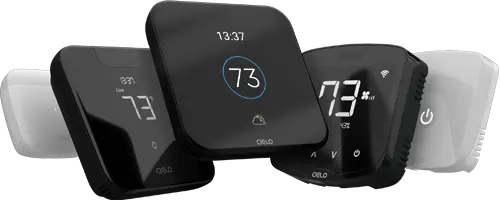
Budget-friendly smart thermostat for central HVAC systems. A thermostat that guarantees savings.
Award-winning smart thermostat for mini-splits. Technology that goes above & beyond.
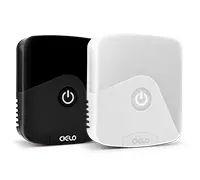
Sleekest smart thermostat for mini-split, window & portable ACs. A design that magically blends.
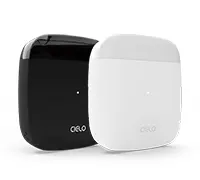
Smart mini-split thermostat that is engineered for affordable comfort. Small in size, big in benefits.
Types of Dehumidifiers
Dehumidifiers come in several types, depending on the size of the space and how much moisture needs to be removed.
- Whole-Home Dehumidifiers
Whole-home dehumidifiers connect directly to your home ductwork or existing HVAC system, treating the humidity level of your entire house at once rather than a single room. As air circulates through your system, the unit pulls moisture from it and drains the collected water. Because they work continuously in the background, whole-home dehumidifiers are a good option for homes where high humidity is widespread rather than limited to one room.
- Portable Dehumidifiers
Single-room dehumidifiers can be moved wherever you need them. Unlike whole-home units with a drain line, the removed water goes into a pan that must be emptied manually.
Portable units are useful for targeting specific areas such as bedrooms, basements, bathrooms, or other spaces that tend to retain moisture.
Does a Dehumidifier Cool a Room?
A dehumidifier does not lower a room’s actual temperature. However, it improves the perceived comfort by reducing the heavy, clammy feeling associated with humid air.
HVAC pro Eli Zimmer explains, “Dehumidifiers don’t actually lower the temperature. The air simply feels less hot when there is less humidity because you don’t feel as crowded or suffocated by the air around you.”
Think about how a 90-degree day in Nevada doesn’t feel nearly as terrible as a 90-degree day in Florida, even though they’re the same temperature.
Related: How to Stay Cool in Florida Heat?
Why Do You Feel Cooler When a Dehumidifier Is Running?
A dehumidifier can improve comfort when excess humidity rises above the recommended 30–50% range. You feel cooler because lower humidity makes it easier for your body to release heat.
When the air contains a lot of moisture, sweat evaporates more slowly. This can leave you feeling sticky, heavy, or overheated, even when the thermostat shows a relatively moderate temperature.
A dehumidifier reduces the amount of moisture in the air, allowing sweat to evaporate more readily. As a result, the room may feel more comfortable even though the actual temperature hasn’t changed.
This is also why humidity control can be especially valuable during seasons when indoor spaces feel damp but aren’t hot enough to require constant air conditioning.
How to Keep Your Home Cool and Comfortable
Reducing that excess moisture can make the indoor environment feel noticeably more comfortable. However, humidity control has its limits. A dehumidifier is not a substitute for an air conditioner when the indoor temperature itself is too high.
If your home is actually hot, think 80–85°F or higher, a dehumidifier alone won’t solve the problem. You’ll need an air conditioner to actually cool the air.
Matt Stone, President of Stone Heating and Air, says, “The biggest misconception is treating a dehumidifier as a replacement for an air conditioner. It is an indoor air quality solution designed to support comfort, not a standalone machine to drop the temperature in your home.”
Should You Run Both AC & Dehumidifier Together?
For optimal comfort, use both an AC and dehumidifier together to manage temperature and humidity in hot, humid conditions. The air conditioning system lowers the temperature, while a dehumidifier controls moisture. You can even set the thermostat slightly higher to save energy and still feel comfortable.
HVAC expert Billy Gregus explains how a dedicated dehumidifier can help reduce the moisture load on an air conditioning system: “When AC is already overwhelmed by high humidity, adding a dedicated whole-home dehumidifier takes that burden off the AC. The AC can focus on cooling the space instead of working away all afternoon trying to wring water out of the air.”
Related: Does High Humidity Affect Your AC Performance?
Automate Your Dehumidifier Using a Smart Thermostat

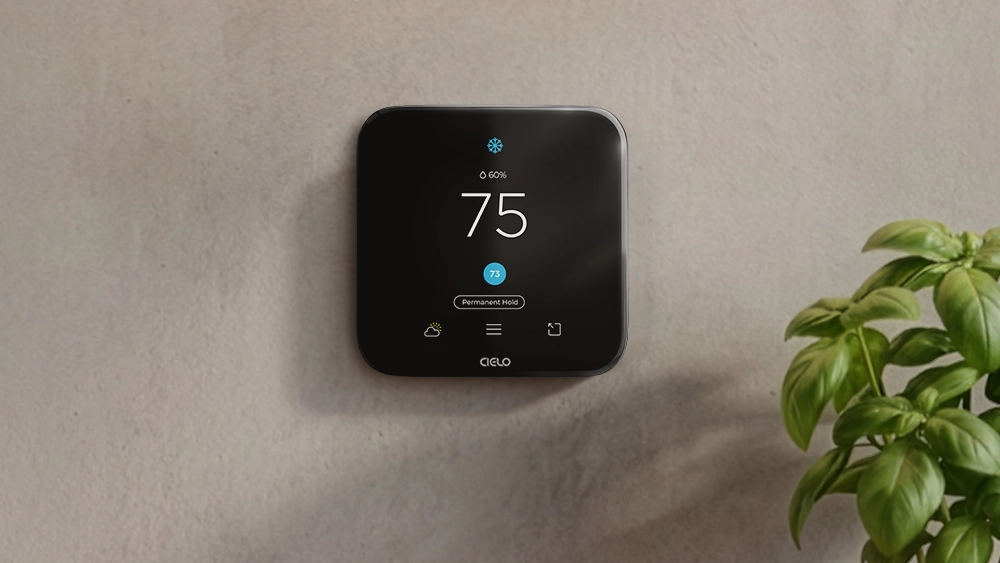
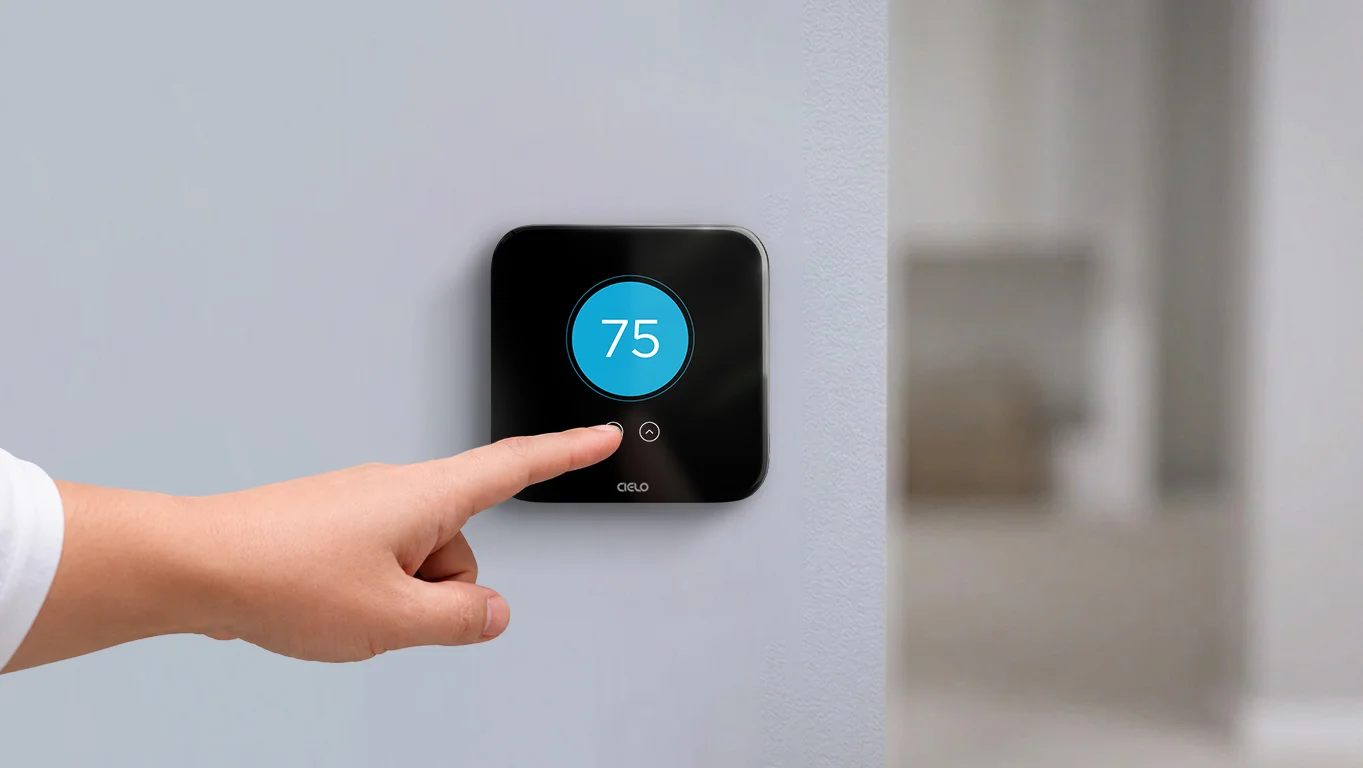
Managing humidity doesn’t have to mean manually checking levels or remembering to turn a dehumidifier on and off. Smart thermostats with humidity control, such as the Cielo Smart Thermostat, have built-in humidity sensors that constantly monitor the indoor humidity levels. You can check humidity levels anytime in the app.
Equip your HVAC system with smart features and achieve the perfect balance between comfort & savings.
Learn more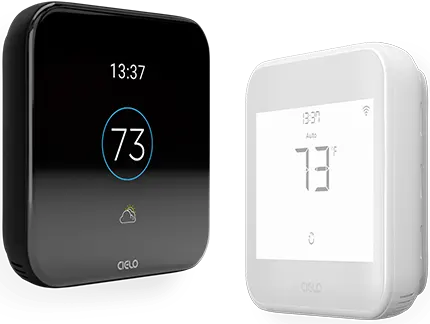
Even better, you can control your whole-home dehumidifier directly with your Cielo Smart Thermostat. You can set up an automation to turn the dehumidifier on or off whenever humidity rises above or falls below your chosen threshold. This helps keep your home consistently comfortable without you having to constantly make adjustments.
In Conclusion
A dehumidifier won’t lower the temperature in your home, but it plays a critical role in how comfortable that temperature feels. By pulling excess moisture out of the air, it helps your body cool itself more effectively and takes pressure off your air conditioning system, allowing it to run shorter, more efficient cycles. For actual cooling, you’ll still need an air conditioner. You can pair it with a dehumidifier, and letting a smart thermostat manage both automatically is often the simplest path to a home that feels comfortable year-round.