
An air filter is a component installed in an HVAC system to capture dust, dirt, pet dander, pollen, and other airborne particles. Its primary function is to improve indoor air quality (IAQ) and protect the unit from dust buildup, which can reduce the overall efficiency and lifespan of the HVAC equipment.
Where Is the Air Filter Located in the HVAC System?
The location of the air filter depends on your HVAC system and home layout. Some filters are located behind a grille in the ceiling, wall, or floor vents, while others are installed near or inside the blower compartment of the AC unit.
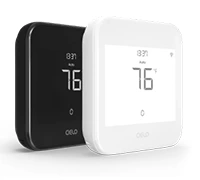
Budget-friendly smart thermostat for central HVAC systems. A thermostat that guarantees savings.
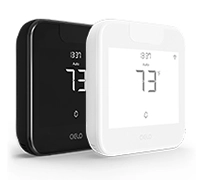
Award-winning smart thermostat for mini-splits. Technology that goes above & beyond.
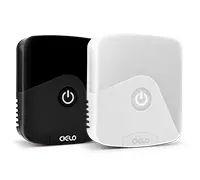
Sleekest smart thermostat for mini-split, window & portable ACs. A design that magically blends.
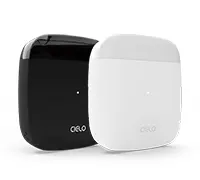
Smart mini-split thermostat that is engineered for affordable comfort. Small in size, big in benefits.
How Does an Air Filter Work?
Indoor air contains a wide variety of contaminants, including dust, dander, dirt, viruses, and bacteria. These particles can degrade indoor air quality, leading to a range of health-related issues.
As air is pulled into the HVAC system through the return ducts, it passes through the air filter. The filter’s fibers or pleated surface capture airborne particles, holding them on the surface or within the filter material. Cleaner air then continues through the system and back into the living space. By removing these particles, air filters help maintain cleaner indoor air and prevent debris from accumulating on critical HVAC components such as the blower, evaporator coil, and ductwork.
How Is the Efficiency of an Air Filter Measured?
The efficiency of an HVAC air filter is measured using the Minimum Efficiency Reporting Value (MERV). MERV is a standardized rating system that evaluates how effectively an air filter captures airborne particles as air passes through it.
The MERV scale ranges from 1 to 16, with a higher number indicating greater filtration efficiency. Filters with higher MERV ratings can capture smaller particles.
Recommended MERV Ratings for Residential Spaces
Most residential HVAC systems are equipped with MERV 8 filters, which provide a good balance between filtration and airflow. For homeowners seeking improved indoor air quality, MERV 13 filters are often recommended, as they can capture smaller particles, including certain airborne viruses and fine contaminants.
However, not all HVAC systems can safely accommodate a MERV 13 filter. Before upgrading, it is important to consult an HVAC professional to ensure your system can maintain proper airflow and operate efficiently with a higher-rated filter.
Types of Air Filters
Here are some of the common types of air filters:
-
Spun Glass or Fiberglass Air Filters
Consisting of strands of glass spun together and reinforced by a metal grate, these low-cost, disposable filters capture large particles such as dust and lint. They offer minimal filtration and primarily protect the HVAC system rather than improve indoor air quality.
-
Pleated Filters
Pleated filters have a larger surface area, allowing them to trap smaller particles such as pollen and pet dander. They provide better filtration than fiberglass filters while maintaining good airflow.
-
HEPA Filters
HEPA filters are highly efficient and can capture up to 99.97% of particles as small as 0.3 microns. They are commonly used in hospitals and specialized residential systems, but often require HVAC modifications.
-
UV Light Filters
UV light uses ultraviolet radiation to kill or deactivate bacteria, mold, and viruses. They do not trap particles and are typically used alongside traditional air filters.
-
Electrostatic Filters
These filters use an electric charge to attract and capture airborne particles, such as dust and allergens. They are available in both disposable and washable options and offer improved filtration over standard filters.
-
Washable Filters
Washable filters are reusable and can be cleaned with water. While cost-effective over time, they generally offer lower filtration efficiency than high-quality disposable filters.
-
Media Filters
Media filters are thick, high-capacity filters designed to capture a wide range of airborne particles. They provide superior filtration and longer service life but may require a compatible HVAC system.