Cielo
Cielo
Key Takeaways
- Tailoring your mini-split thermostat settings to each season boosts efficiency and comfort.
- Raising the setpoint by 7–10°F when you are away can significantly reduce energy use.
- Smart mini-split thermostats like Cielo Breez offer advanced features to automate your home climate.
Getting the most out of your mini-split system comes down to using the most efficient thermostat settings. Set the temperature too low in summer or too high in winter, and your energy bills will reflect it. Drastic or frequent adjustments put unnecessary strain on the system, increase runtime, and drive up costs.
The good news is that maintaining a comfortable home climate doesn’t require constant thermostat adjustments. With a clear understanding of the ideal settings for each season and the smart features available on modern mini-split thermostats, you can keep your home comfortable while keeping bills in check.
Let’s explore the ideal mini-split thermostat settings for different scenarios and how to optimize your thermostat for maximum efficiency.
- What Is a Mini-Split Thermostat?
- Ideal Mini-Split Thermostat Settings for Summer
- Mini-Split Thermostat Settings for Winter
- Spring and Fall Thermostat Settings
- Mini-Split Temperature Settings for Comfortable Sleep
- Thermostat Settings for Seniors and Children
- Programming Your Mini-Split Thermostat for Maximum Efficiency
- In Conclusion
- Frequently Asked Questions
What Is a Mini-Split Thermostat?
A mini-split system can be controlled in one of two ways: through a basic remote or a smart thermostat. A standard remote provides controls such as adjusting the temperature, switching between modes, and changing fan speed. While sufficient for basic operation, it offers little in the way of automation or energy management.
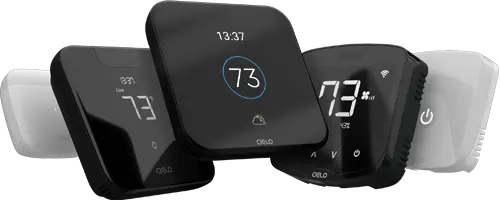
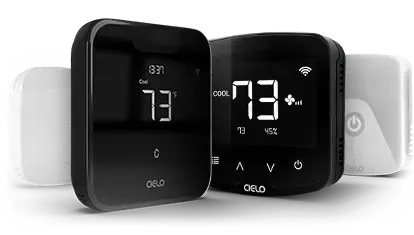
A smart thermostat for a mini-split connects your unit to Wi-Fi and gives you full control from anywhere, at any time through a smartphone app. Beyond basic temperature controls, smart mini-split thermostats like Cielo Breez offer advanced features that elevate both comfort and efficiency. They provide smart scheduling, geofencing, energy usage insights, air filter monitoring, and so much more.
Now, let’s break down the ideal thermostat settings for various scenarios.
Your best choice to make any mini-split, window,
or portable AC smart. Enhance your comfort and savings.
Ideal Mini-Split Thermostat Settings for Summer
When the temperature rises, you might be tempted to crank up the thermostat. However, maintaining a slightly higher temperature can lead to significant savings. Set your thermostat to 78°F when you are home to strike a perfect balance between comfort and efficiency.
When leaving the house, raise the setpoint to 85-90°F or 7-10 degrees above your at-home setting. Keeping a slightly elevated setpoint prevents the home from becoming overly hot and humid while still conserving energy during your absence.
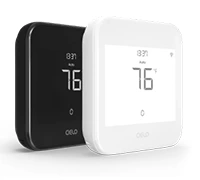
Budget-friendly smart thermostat for central HVAC systems. A thermostat that guarantees savings.
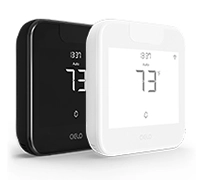
Award-winning smart thermostat for mini-splits. Technology that goes above & beyond.
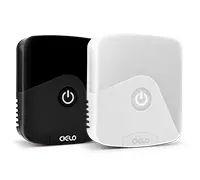
Sleekest smart thermostat for mini-split, window & portable ACs. A design that magically blends.
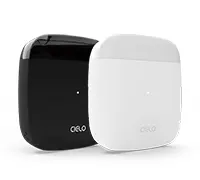
Smart mini-split thermostat that is engineered for affordable comfort. Small in size, big in benefits.
Mini-Split Thermostat Settings for Winter
According to guidelines from the U.S. Department of Energy, setting your thermostat to around 68°F to 70°F during the day is recommended for winter. Maintaining a lower indoor temperature slows down the heat loss, leading to energy savings over time.
When the home is unoccupied during winter, lower the setpoint by 7°F to 10°F from your usual setting. This approach keeps the home from getting uncomfortably cold and guards against issues such as frozen pipes.
Cielo Breez mini-split thermostats have a Freeze Protection mode in which your unit operates in low-power heating mode, typically maintaining the room temperature around 46°F. This temperature prevents freezing while consuming minimal energy.
Spring and Fall Thermostat Settings
Transitional seasons like spring and fall can bring wide temperature swings throughout the day. Warm, sunny afternoons followed by cool, breezy evenings.
Frequent thermostat adjustments during these seasons can cause your unit to work harder, leading to increased energy consumption.
A more effective approach is to identify a comfortable temperature range and stick to it, making only small, gradual adjustments as needed. A temperature range between 70°F and 74°F is a comfortable range for most homes.
You can also set a schedule to account for the morning and evening temperature differences. For example, set a slightly lower temperature in the afternoon, then increase the setpoint as temperatures drop in the evening.
During spring and fall, take advantage of the auto mode on your mini-split thermostat. Auto mode allows the system to switch between heating and cooling automatically to maintain your preferred indoor temperature. The day that starts cool and turns warm by afternoon, auto mode handles the transition seamlessly, keeping your home comfortable without constant adjustments.
Mini-Split Temperature Settings for Comfortable Sleep
Sleep quality is closely tied to bedroom temperature, and your mini-split thermostat settings at night can make a noticeable difference. If your room is too warm, you may wake up sweaty and restless. If it is too cold, you may feel uncomfortable, sleep poorly, and waste energy by overheating the room just to feel warm again.
The ideal sleeping temperature is between 65°F and 68°F. This range supports the body’s natural temperature drop during sleep.
Thermostat Settings for Seniors and Children
Seniors and young children are more sensitive to temperature changes than healthy adults and may struggle to regulate body temperature effectively. For the elderly, a slightly warmer indoor environment is generally more suitable. Setting the thermostat between 70°F and 72°F during waking hours helps maintain consistent warmth.
For homes with infants and young children, a temperature between 68°F and 72°F is recommended. Avoiding large swings throughout the day and paying close attention to nighttime settings, when younger children are most vulnerable to temperature-related discomfort.
Programming Your Mini-Split Thermostat for Maximum Efficiency
Regardless of the season, a few universal best practices can help you get the most out of your mini-split thermostat.
-
Set Schedules
Programming your thermostat around your daily routine ensures the system only runs when it actually needs to. Setback your thermostat when the space is unoccupied and restore your preferred comfort settings before you return.
-
Use Comfy Max to Maintain an Ideal Climate
Mini-split systems have their thermostat integrated into the indoor unit, which is usually mounted high on the wall. It reads the air temperature in its immediate vicinity, which can differ from the actual room temperature. As a result, the system can struggle to maintain a consistent, accurate temperature throughout the space.
Cielo Breez Max has an advanced feature called Comfy Max that uses an AI-based algorithm to maintain your preferred temperature. As soon as your room temperature exceeds or falls below your specified temperature, even by one degree, Comfy Max automatically switches to the best possible settings to quickly reach your desired comfort levels while preventing overheating and overcooling.
When using Comfy Max, Breez Max relies on its built-in temperature sensors rather than the mini-split sensors, which will read the temperature where you are. This allows the mini-split to respond to the actual conditions and maintain a consistent room climate.
-
Use Location-Based Controls
With the geofencing feature, your mini-split thermostat automatically adjusts the temperature as you leave or return home, eliminating energy waste without any manual input.
-
Monitor Energy Usage
Cielo Breez mini-split thermostats provide detailed runtime and energy usage insights directly in the Cielo Home app. Reviewing this data periodically helps you identify patterns of unnecessary use and make adjustments that reduce wastage over time. Small changes informed by real data can lead to consistently lower energy bills throughout the year.
-
Keep Filters Clean
A clogged or dirty air filter restricts airflow and reduces system efficiency regardless of how well your thermostat settings are configured. Checking and cleaning filters regularly, particularly at the start of each season, ensures your mini-split operates efficiently. Cielo Breez mini-split thermostats provide air filter monitoring alerts, so you are notified when it is time to clean the filter.
In Conclusion
The right thermostat settings don’t just improve comfort; they directly impact how much energy your mini-split uses and what you pay on your utility bills each month. By tailoring your settings to each season and leveraging smart features, you can keep your home consistently comfortable while lowering energy consumption.
Frequently Asked Questions
Mini-splits do not increase their output simply because the target temperature is set significantly higher or lower than the room temperature. The system operates at its own capacity. Setting the thermostat to 65°F will not cause the unit to cool any faster than if you had set it to 72°F. All it will do is cause the system to overshoot your actual comfort level, resulting in a room that ends up colder than intended and wastes energy in the process. Mini-splits may or may not shut off once the desired temperature is achieved. This depends on the type of mini-split you have. Traditional mini-splits will cycle the compressor off briefly once the set temperature is reached. Whereas, inverter-driven mini-splits usually do not shut off completely. Instead, they ramp down to a low output to maintain your set temperature.
Does Cranking the Mini-Split Thermostat Help Heat or Cool Your Home Faster?
Do Mini-Splits Turn Off When the Temperature Is Reached?